
Report
Exploring online, illegal, individual-led lotteries and raffles
Exploring online, illegal, individual-led lotteries and raffles
Routes into online individual-led lotteries and raffles
Social media platforms enable passive discovery of online individual-led lotteries and raffles
Digital intelligence highlights how seamlessly these draws blend into users' everyday feeds. Because they are often framed as 'competitions' or 'giveaways' rather than gambling, they can easily bypass a viewer’s caution, especially if they look legitimate. A user scrolling their TikTok 'For You' page might passively land on a highly animated LIVE stream offering a '£2 lucky dip' for a car. This low barrier to entry, combined with the exciting, fast-paced nature of the stream, makes it incredibly easy for viewers to make an impulse decision to join in without actively seeking out a gambling product. Social media platforms are powerful tools for widening access to these draws.
According to both the quantitative and digital intelligence phases, platform features play an important role in surfacing content about online individual-led lotteries and raffles. This is particularly evident on TikTok, where TikTok LIVE and the For You Page are the most common ways people discover this content, as seen in Table 3. The platform’s algorithm helps such content spread quickly, increasing visibility and reach.
Table 3: How do you typically find out about online individual-led lotteries or raffles via TikTok?
| Channels for discovering online individual-led lotteries or raffles via TikTok | People discovering raffles and/or lotteries using that channel (percentage) |
|---|---|
| TikTok LIVE | 49% |
| TikTok ‘For You Page’ | 41% |
| Influencer posts on other social platforms | 31% |
| TikTok hashtags | 31% |
| Chat groups in instant messaging apps | 24% |
| Word-of-mouth | 23% |
| Paid ads on other social media platforms | 21% |
For most players, the route into these draws is accidental rather than deliberate
Both the qualitative and quantitative phases found that most players do not actively seek out online individual-led lotteries and raffles. They usually come across them while scrolling, through reposts, or because a friend has shared them. The qualitative interviews also suggest some differences between TikTok and Facebook routes into participation.
On TikTok, these draws are typically encountered incidentally, driven by the algorithm rather than personal recommendation. Participants were drawn to them because they were seen as fun and worth watching, particularly due to the live, high-energy format.
As one participant put it:
"I love the fact they’re so animated…They’re so engaging, the commentary, the sort of excitement. They usually have an assistant spinning the tombola. It's so convenient, you don't need to go anywhere, it's… it's right on your phone."
– Participant taking part in an illegal lottery, TikTok, Male, 33 years old
On Facebook, online individual-led lotteries and raffles were more likely to appear through friends, local businesses and community members. This social proximity created a sense of borrowed trust, making the draw feel more familiar and credible. In some cases, it also created a feel-good factor, where people felt they were supporting a local business or contributing to a charitable cause.
As one participant explained:
"…It [an individual-led lottery or raffle she entered] was a local baker. She makes cakes and things, and you could win a cake decorated of your choice. And my daughter had a big birthday coming up, so I entered it…that's the sort of thing that I will take part in."
– Participant taking part in an illegal lottery, Facebook, Female, 66 years old
A mix of prize appeal, ease of entry and visible winners encourages participation
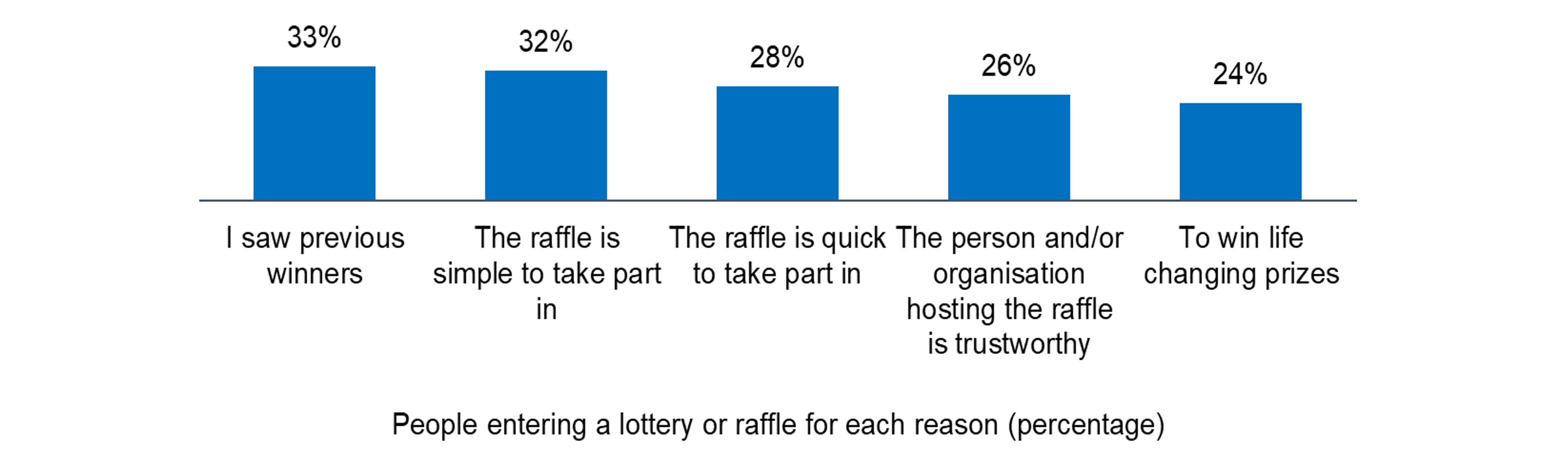
Figure 2: Which of the following statements, if any, best describes why you choose to enter an online individual-led lottery or raffle
| Why people enter online individual-led lotteries or raffles via TikTok | People entering a lottery or raffle for each reason(percentage) |
|---|---|
| I saw previous winners | 33% |
| The raffle is simple to take part in | 32% |
| The raffle is quick to take part in | 28% |
| The person and/or organisation hosting the raffle is trustworthy | 26% |
| To win life changing prizes | 24% |
As shown in Figure 2, seeing previous winners was the most commonly cited reason for entering an online individual-led lottery or raffle on TikTok, mentioned by 33 percent of participants. For many, visible winners made the draw feel more credible and transparent, helping to reassure them that prizes were genuine and that real people did receive them.
As one participant put it:
"They [raffle hosts] do post that somebody's won, and sometimes they'll post the names, and people post underneath, saying, “Great, I'm so glad I won”, so you think, they have won, and it is legitimate."
– Participant taking part in an illegal lottery, Facebook, Female, 54 years old
Ease also played an important role. Around a third said the raffle was simple to take part in (32 percent), while 28 percent said it was quick to enter. Participants described TikTok as making entry feel straightforward and convenient, with draws often integrated into the content they were already watching.
They also mentioned:
"I just prefer TikTok mainly, because it's just easy to use, there's a lot more variety and content. It just feels more fun and natural."
– Participant taking part in an illegal lottery, TikTok, Male, 33 years old
Trust in the host was another factor, with 26 percent saying they entered because the person or organisation hosting the raffle felt trustworthy. In practice, this trust was often built gradually through repeated exposure to the host’s content, regular posting and visible interaction with other players.
In the survey, 24 percent of those who had taken part in an online individual-led lottery or raffle via TikTok said they entered to win life-changing prizes (Figure 2), indicating that prize value is a meaningful driver for a sizeable minority.
Qualitative interviews suggest prizes ranged from small, community-based rewards (for example, a local baker offering a decorated cake on Facebook) to higher-value, aspirational prizes more commonly associated with TikTok raffles (for example, cars, technology and large cash sums).
One participant spoke of the prizes offered and their appeal:
"Some [hosts put up prizes of] £5,000, £3,000, 10,000 pounds… Some put it up with a product that, if you are a winner, you win a motorcycle. If you are a winner, you win a car or you win something good."
– Participant taking part in an illegal lottery, TikTok, Male, 32 years old
Pre-draw content and live engagement help sustain interest
The content leading up to the draw does more than simply provide information about the prize and draw date. The digital intelligence phase showed that prize-led posts, teaser content, countdowns and ‘last chance to enter’ messaging are used to build urgency, anticipation and fear of missing out. Hosts also tend to post repeatedly in the run-up to increase reach and keep the draw front of mind.
Participants in the qualitative phase often emphasised that these draws felt less like formal gambling and more like live entertainment. Real-time commentary, hype and direct interaction created a sense of momentum and community that was distinct from more traditional gambling products. For some, this social energy made participation feel more engaging and immediate.
As one participant explained:
"When they do the lottery on Saturday, it's so boring, it's just literally spinning the balls… there's not much fun and excitement or build-up or anticipation. The thing with the live influencers, they really hype it up, you could win this… they're talking to you."
– Participant taking part in an illegal lottery, TikTok, Male, 33 years old
Scale of participation in online individual-led lotteries and raffles Next section
Trust and legitimacy
Last updated: 13 August 2026
Show updates to this content
No changes to show.