
Report
Initial findings from new data on consumer trust – GSGB
Initial findings from new data on consumer trust – GSGB
Protection and safety
In earlier phases of the research the protection of vulnerable groups, particularly young people, was consistently identified as a factor in maintaining trust in the gambling industry. Participants expressed concerns over the growing exposure of younger, more vulnerable audiences to gambling through wider marketing and advertising, particularly during sporting events. Safeguarding children was seen to be a shared societal responsibility and therefore a key factor influencing peoples’ trust in gambling.
"I think that the protection of children is the greatest thing the Gambling Commission can do."
– Qualitative Research Participant
The following statements were developed to measure this key driver:
Effective measures are in place to protect young and other vulnerable people when gambling.
Gambling companies have effective checks in place before they allow people to gamble.
Effective measures are in place to protect young and other vulnerable people when gambling
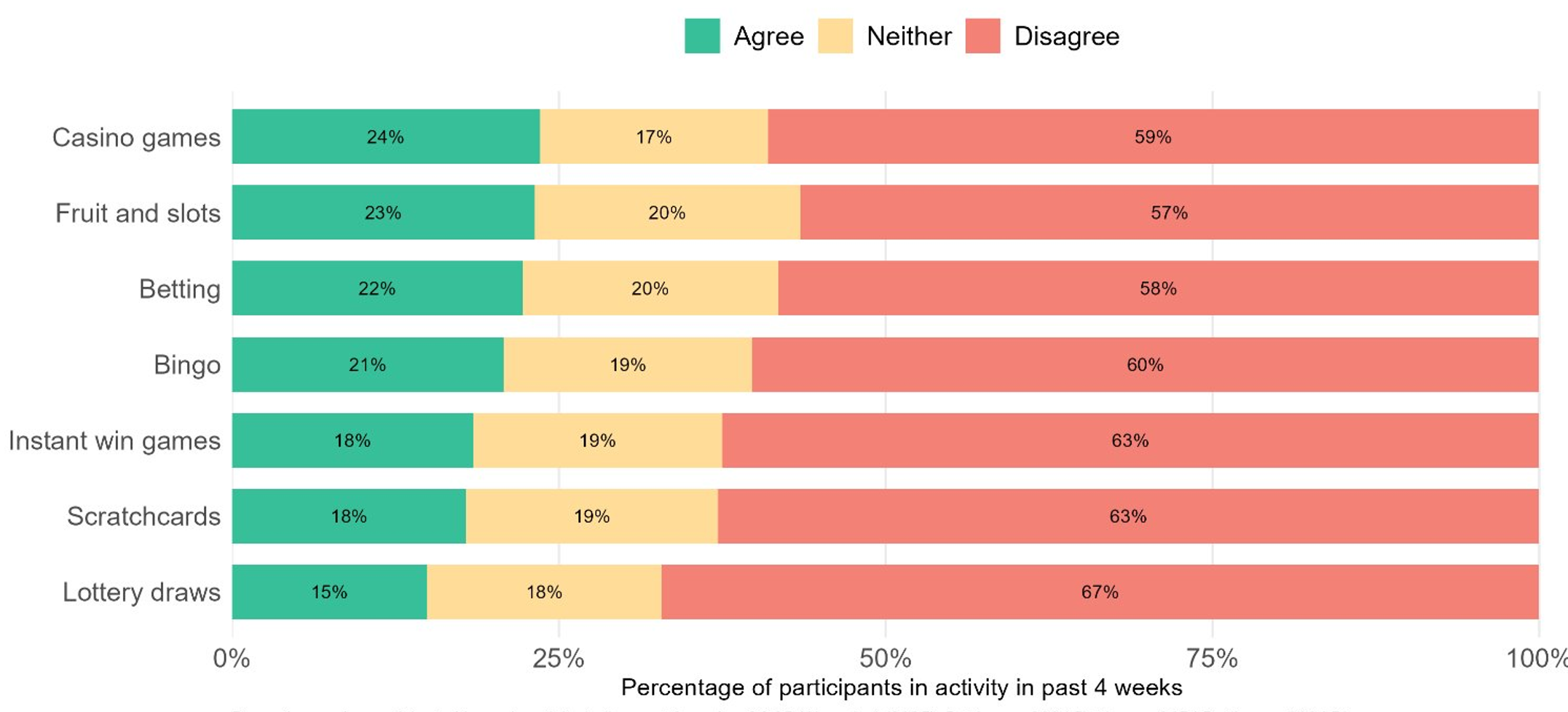
Overall 14 percent of those who had gambled in the past 12 months agreed with this statement, with 19 percent responding neutrally, and 67 percent disagreeing. Younger adults aged 18 to 24 were the most likely to disagree that effective measures are in place to protect young and other vulnerable people (70.3 percent). Those aged 75 and over were slightly more likely than other age groups to agree with the statement (18.4 percent). Women are more likely to disagree that effective measures are in place to protect young and other vulnerable people than men (69 percent compared to 65 percent).
Agreement also varied by the types of gambling activities people had taken part in over the past four weeks. Those who had participated in casino games (23.5 percent), fruit and slots (23.2 percent), and betting (22.2 percent) were more likely to agree that effective protections are in place, while agreement was lowest among lottery draw players (14.9 percent)
Levels of agreement did not differ significantly based on whether participants rated their most recent gambling experience as ‘positive’ (18 percent), ‘neutral’ (11 percent), or ‘negative’ (13 percent).
Figure 5: Agreement level with ‘protection measures’ statement by gambling activity in the past 4 weeks
| Activity | Agree (percentage) | Neither (percentage) | Disagree (percentage) |
|---|---|---|---|
| Casino games | 24 | 17 | 59 |
| Fruit and slots | 23 | 20 | 57 |
| Betting | 22 | 20 | 58 |
| Bingo | 21 | 19 | 60 |
| Instant win games | 18 | 19 | 63 |
| Scratchcards | 18 | 19 | 63 |
| Lottery draws | 15 | 18 | 67 |
Gambling companies have effective checks in place before they allow people to gamble
25 percent of those who had gambled in the past 12 months agreed with this statement, with 25 percent responding neutrally and 50 percent disagreeing. Those aged 18 to 34 had higher levels of agreement that effective checks are in places before allowing people to gamble (32 percent) and those aged over 65 show the highest disagreement that effective checks are in place (60 to 61 percent). This could be due to the recency of younger players being asked to confirm their age, for example. Men had higher levels of agreement that effective checks are in place before allowing people to gamble (27 percent compared to 22 percent), and women had higher levels of disagreement (53 percent compared to 48 percent). This factor could also be influenced by consumers’ engagement with the illegal gambling market, where age verification checks and other measures are applied less consistently, or not at all. This will be an area for further exploration in the GSGB.
“I have never been asked my age or whether I might be a vulnerable person when gambling online”
– Qualitative Research Participant
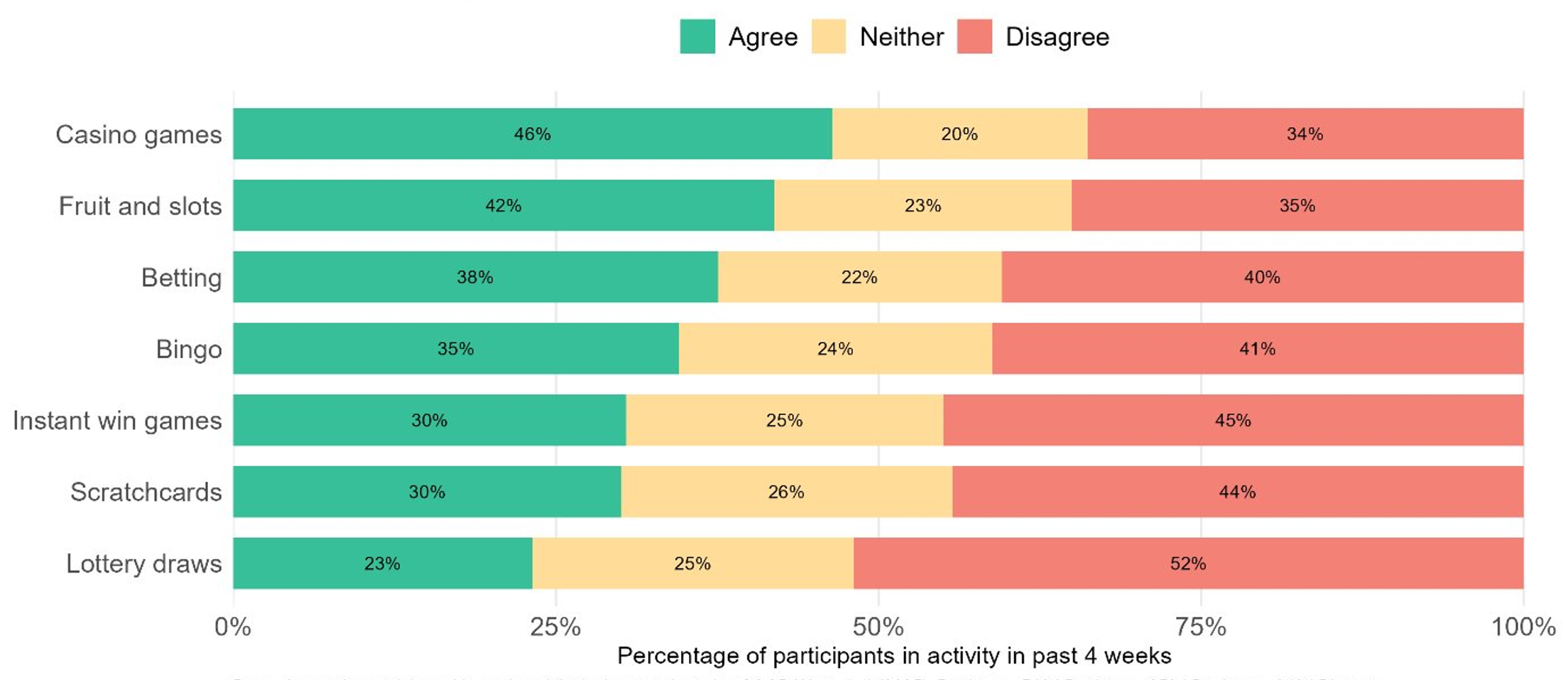
Those who played casino games in the past 4 weeks are 1.9 times more likely than average to agree that effective checks are in place before allowing people to gamble. Agreement levels among lottery players are close to the overall average. Participants who rated their most recent gambling experience as ‘positive’ were more likely to agree with the statement (31 percent), than those who rated it as ‘neutral’ (18 percent) or ‘negative’ (21 percent).
Figure 6: Agreement level with ‘effective checks’ statement by gambling activity in the past 4 weeks
| Activity | Agree (percentage) | Neither (percentage) | Disagree (percentage) |
|---|---|---|---|
| Casino games | 46 | 20 | 34 |
| Fruit and slots | 42 | 23 | 35 |
| Betting | 38 | 22 | 40 |
| Bingo | 35 | 24 | 41 |
| Instant win games | 30 | 25 | 45 |
| Scratchcards | 30 | 26 | 44 |
| Lottery draws | 23 | 25 | 52 |
Base: Participants who gambled on each activity in the past 4 weeks (Bingo: 714; Casino games: 466; Betting: 1,616; Fruit and slots: 757; Instant win games: 1,257; Lottery draws: 6,388; Scratchcards: 1,954).
The next page in this section is Transparency and fairness.
Last updated: 23 July 2026
Show updates to this content
No changes to show.