
Report
Illegal gambling - Phase 4: Initial findings from new data on consumer engagement with illegal gambling websites
The initial findings from new data on consumer engagement with illegal gambling websites.
Indicators of engagement with illegal gambling websites
This section focuses on each indicator, in relation to those who have engaged with an illegal gambling website (that is, met the threshold to be categorised as engaging with an illegal gambling website in the past 4 weeks or 12 months).
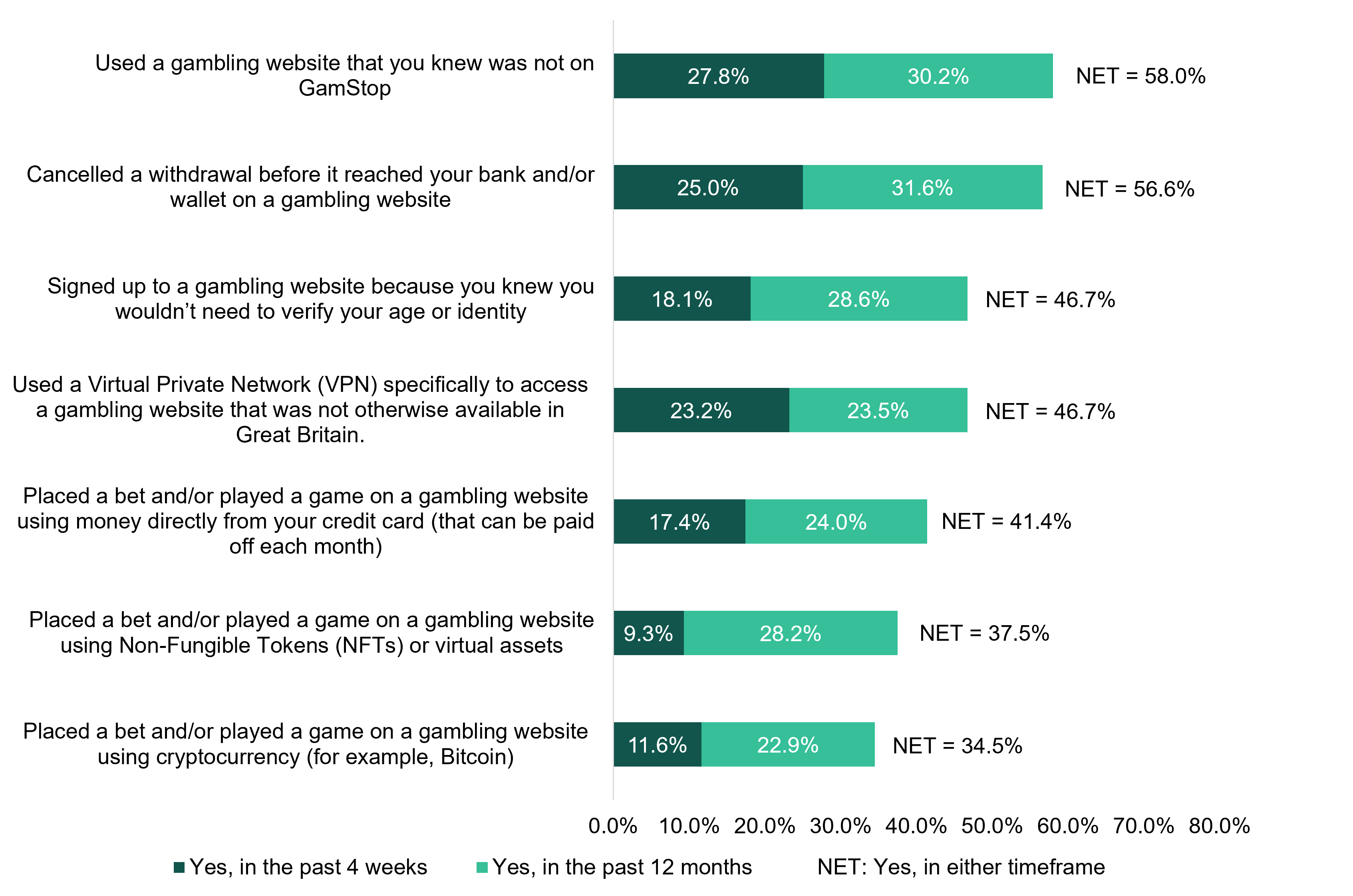
Figure 4 shows the prevalence of indicators of engagement with illegal gambling websites among this group, within the past 4 weeks and past 12 months11.
Figure 4: Indicators of engagement with illegal gambling websites, of those who engaged with an illegal gambling website
| Indicators of engagement | Yes, in the past 4 weeks | Yes, in the past 12 months | NET: Yes, in either timeframe |
|---|---|---|---|
| Used a gambling website that you knew was not on Gamstop | 27.8% | 30.2% | 58.0% |
| Cancelled a withdrawal before it reached your bank and/or wallet on a gambling website | 25.0% | 31.6% | 56.6% | Signed up to a gambling website because you knew you wouldn’t need to verify your age or identity | 18.1% | 28.6% | 46.7% | Used a Virtual Private Network (VPN) specifically to access a gambling website that was not otherwise available in Great Britain | 23.2% | 23.5% | 46.7% | Placed a bet and/or played a game on a gambling website using money directly from your credit card (that can be paid off each month) | 17.4% | 24.0% | 41.4% | Placed a bet and/or played a game on a gambling website using Non-Fungible Tokens (NFTs) or virtual assets | 9.3% | 28.2% | 37.5% | Placed a bet and/or played a game on a gambling website using cryptocurrency (for example, Bitcoin) | 11.6% | 22.9% | 34.5% |
Base: Those who have engaged with an illegal gambling website in either the last 4 weeks or the last 12 months (127 to 128 unweighted).
Not on Gamstop
For those who had engaged with an illegal gambling website in either timeframe, one of the most commonly reported indicators, was ‘used a gambling website that you knew was not on Gamstop’ (58%). The most recent phase of this research has revealed that consumers searching for ‘not on Gamstop’ gambling websites has become a primary gateway to the illegal online gambling market. The term has evolved beyond its original meaning, and is now widely used as a shorthand for features associated with the illegal market.
Whilst research has shown that some users do deliberately use illegal gambling websites to circumvent Gamstop, this coded terminology suggests that others are also actively seeking out websites through specific and well-understood terms, creating a normalised and established pathway into illegal online gambling. Therefore, it is not surprising that this indicator was among one of the most prevalent for those engaging with illegal gambling websites.
Cancelling a withdrawal
One of the most reported indicators was cancelling a withdrawal (56.6% across both reported timeframes). This finding is consistent with earlier phases of this series of research, which identified this indicator as a reliable indicator of engagement with illegal gambling websites. However, the prevalence of this indicator among those who engaged with illegal gambling websites was higher than anticipated, as cancelling a withdrawal had originally been regarded as a relatively uncommon experience.
Avoiding verification processes
46.7% of those engaging with illegal gambling websites reported that they signed up to a gambling website because they wouldn’t need to verify their age or identity. 18.1% reported doing so in the past 4 weeks, while 28.6% reported doing so in the past 12 months. This variation is not unexpected, as age and identity verification requirements are typically encountered when first opening gambling accounts. As a result, respondents may have been more likely to report this indicator over a 12 month period, reflecting the occurrence that users continue to use their existing gambling accounts rather than regularly create new accounts.
Use of alternative payment methods
The least common indicators reported overall were ‘Placed a bet and/or played a game on a gambling website using Non-Fungible Tokens (NFTs) or virtual assets’ (37.5%) and ‘Placed a bet and/or played a game on a gambling website using cryptocurrency (for example, Bitcoin)’ (34.5%). Despite being the least prevalent indicators, more than a third of illegal gambling website users reporting use of these alternative payment methods suggesting that cryptocurrency, NFTs and other virtual assets may now form an established part of the illegal gambling ecosystem.
Furthermore, both indicators were more commonly reported for the past 12 months than in the past 4 weeks. This could suggest that gambling with NFTs, virtual assets or cryptocurrency is not a regular activity for many users, but instead occurs on a more occasional basis. Recent research suggests that some individuals are attracted to cryptocurrency because it is perceived as a way to stay up to date with an increasingly digital society.
Paying to gamble with a credit card
Of those engaging with illegal gambling websites, 41.4% reported that they placed a bet and/or played a game on a gambling website using money directly from their credit card . Although this indicator was reported at a slightly higher rate within the past 12 months (24.0%) than in the past 4 weeks (17.4%), this was not statistically significant. It is important to acknowledge that respondents may have issues with recall of when they exhibited this behaviour.
Additionally, the prevalence of this indicator could be potentially attributed to respondents misunderstanding credit card versus debit card use. Research conducted by MoneySuperMarket (opens in new tab) found that as much as a quarter of British people do not know the difference between a credit and debit card. This could potentially lead to respondents misreporting their credit card depositing behaviours, a factor that has been accounted for in the Index scoring approach for determining engagement with illegal gambling websites.
References
11 Responses relating to any experiences of indicators that occurred more than 12 months ago are not included in the findings presented in this section.
Participation estimates for engagement with illegal gambling websites
Last updated: 5 November 2026
Show updates to this content
No changes to show.